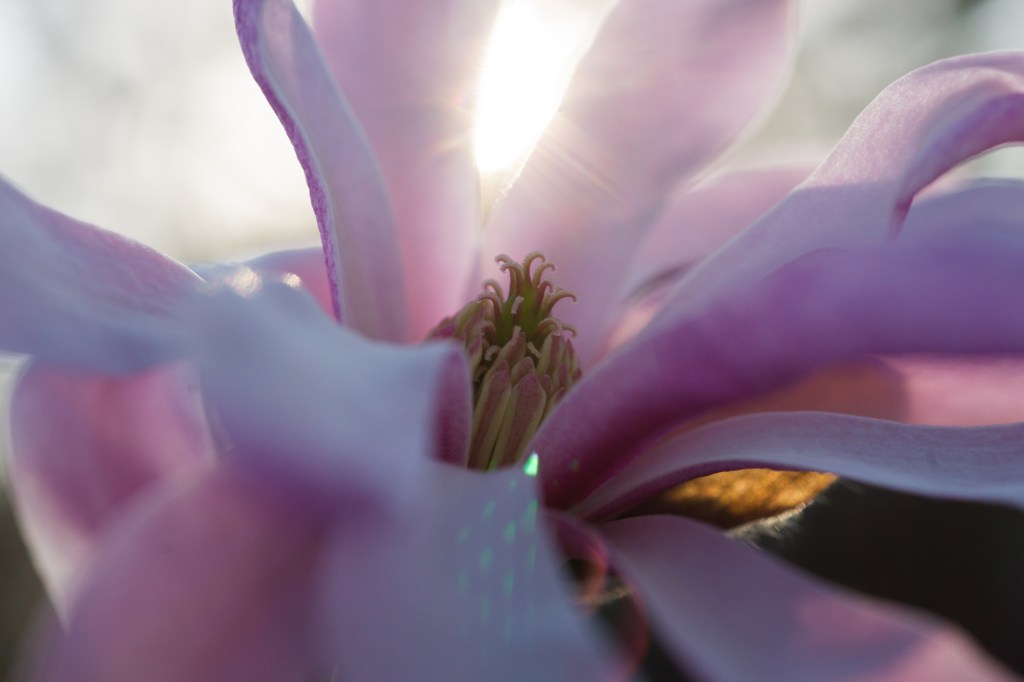
I love a photo with the sun peeking through. Maybe it’s cliché, but I love it. My magnolia is perfectly placed (complete fluke); when it’s blooming, the sun lines up just right. I have a plethora of backlit, glowy magnolia photos and I guarantee I’ll keep taking them as long as the magnolia and I are both here.
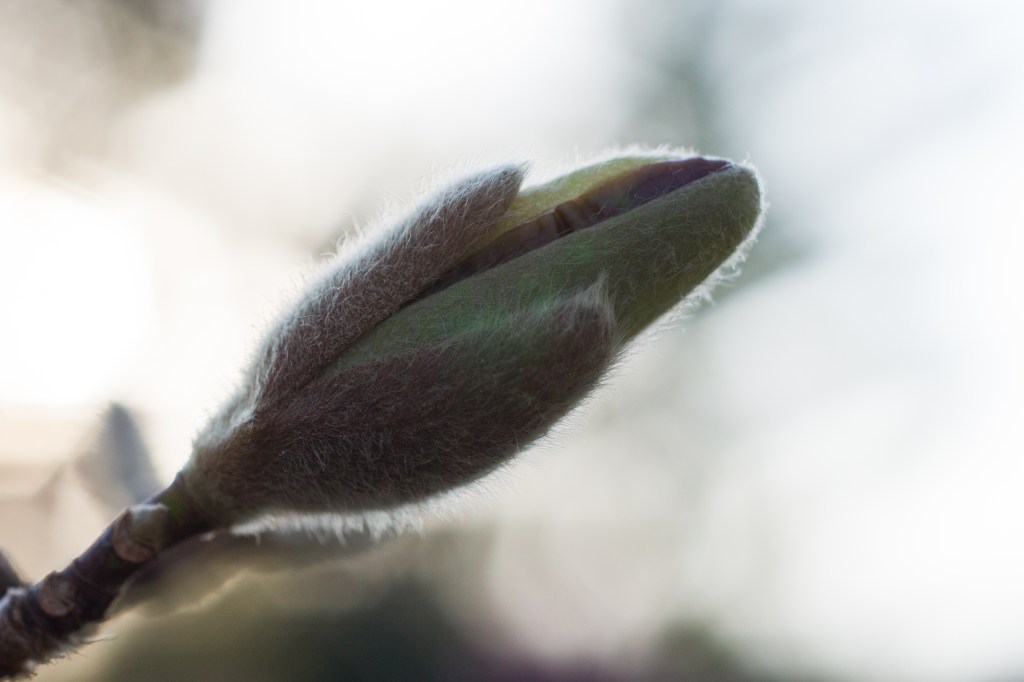
One thing I love about a magnolia tree in bloom is that each stage of bloom seems to exist at once. The fuzzy buds, present for weeks, eventually split and allow the flower to emerge. It’s a birth of sorts, beautiful life making itself known. I visit the magnolia often in early spring, rubbing the fuzz of the buds and impatiently waiting for the fuschia, pink, and white petals. Eventually, I’m rewarded with the showy blooms.
And they are beautiful. I’m drawn to them each spring, camera in hand. They don’t stay beautiful for long, though. In a matter of days their petals progress from new, fresh, and unblemished to wilted, buggy, and age-spotted, clearly on their way out. Magnolias are sneaky. Clever. They bloom in rounds and stretch out their time. That tree will make the most of spring. From a distance, it will be a showy spectacle for a while; taken as a whole, it’s still beautiful. Close inspection will offer a different story.
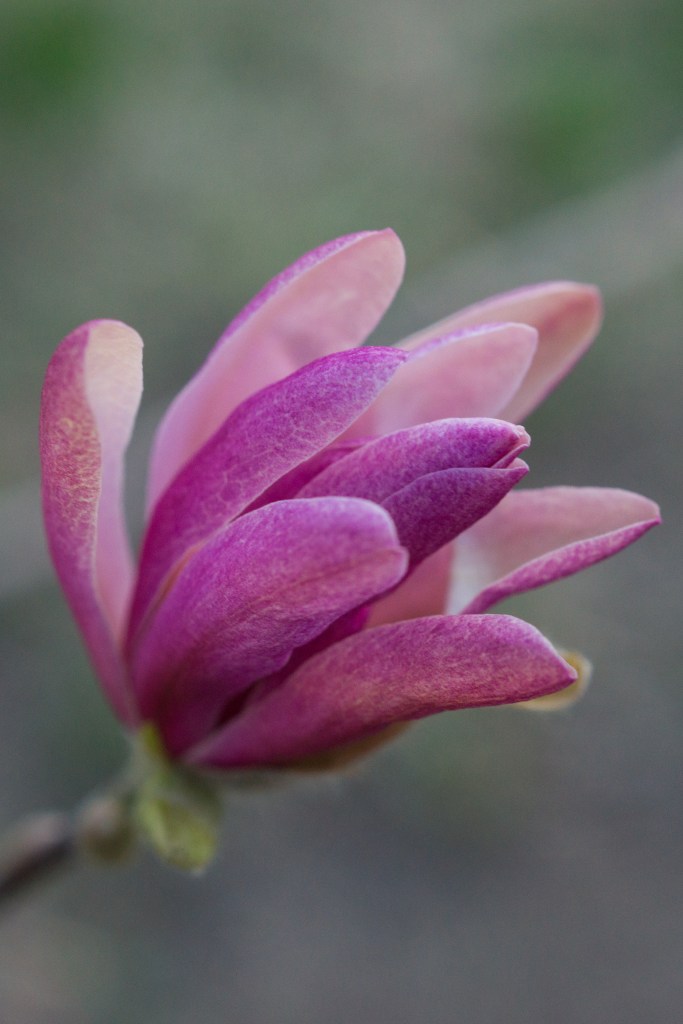
Close inspection will give away the secrets of the sneaky, clever magnolia. From the street, the ugly bits — those whose time has come and gone — aren’t so noticeable; step into the yard, get close enough to touch, and the tree can’t keep its secrets.
Today, there is no ugliness on the tree; it is perfect. I know the ugliness is just days away, though; the flowers can’t stay pristine. That’s not how magnolias work. That’s not how the world works.
These are strange thoughts on this Easter Eve.
I look at that beautiful blooming tree, but I can’t focus entirely on the beauty; I know what’s coming. I treasure the blooms — I do. But even as I enjoy what’s right in front of me, there’s the niggling awareness that it cannot — will not — last. Mary knew that about her son. From the beginning she knew he was no mere mortal, but he was her son. I don’t know how she functioned.
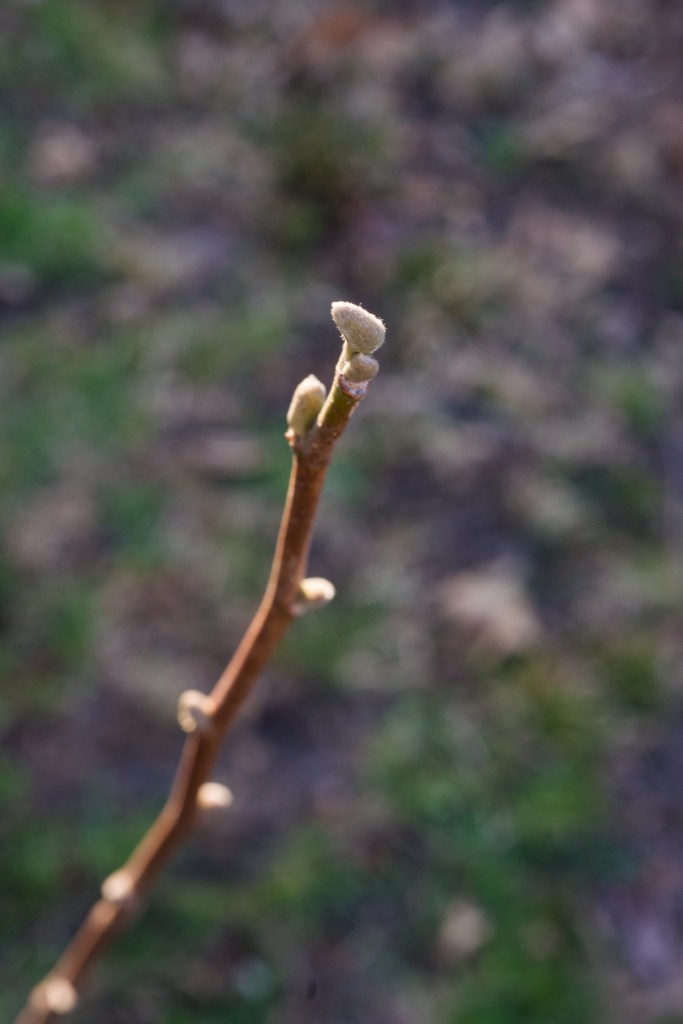
On today’s magnolia walk around my yard, I had two new stops to make; there are two baby magnolias, memorial gifts from people dear to me, coming to life. I can see them from my kitchen window; all winter I prayed that the twiggy little things would survive, and they did. They are hopeful signs of life when I need it most. They are love and remembrance.
No blasphemy intended here, but for the past few days, I’ve thought to myself, “I feel ya, Mary.” I’m no holy mother — no such claims. I am just another mother missing one son. In that respect, I feel ya, Mary. Unlike Mary’s son, my son was a mere mortal; he will not emerge from a tomb tomorrow morning. He won’t save the world, but he was much, and to many.
No, neither Cooper nor I will save mankind. Again — mortals. But I can channel John Wesley and Jimmy Carter. I can strive to do whatever I can, wherever I am, whenever I can, for as long as I can, with whatever I have. I can try to make a difference. What I have is Cooper’s story. In my reality, making a difference means doing battle against the stigma of mental illness, facing the tragedy of suicide.
This year, I can’t look at the magnolia without anticipating what’s to come — the day the beauty fades and the wilting wins. The day the petals fall. Don’t get me wrong — I don’t only see the negative; I appreciate the beauty while it’s here. I cherish good days, good moments, differently than a year ago. Still, my reality has changed. I can see the beauty in a bloom but I can’t ignore what’s next.
The trick, I suppose, is to make an effort to use my new reality to help others. Some days, I can’t even help myself; helping others is impossible. But, like the magnolia, we humans bloom in rounds. Not every day is a blighted, ugly petal; some are fuzzy buds, some are gloriously perfect blooms. And, blessedly, some are twiggy baby trees, years from their first flowers, offering only hope.
 Woods Writes