Today’s weather was a preview of spring as February winds down. It’d be great if we could just slide into spring — if winter were truly over — but that seems unlikely. No, it’s more likely that we will see more snow, but maybe no more two-week stretches of freeze-your-nose-hair cold. Regardless of what the next weeks hold, today was a day to go outside, enjoy the sun on our faces, and look toward spring.
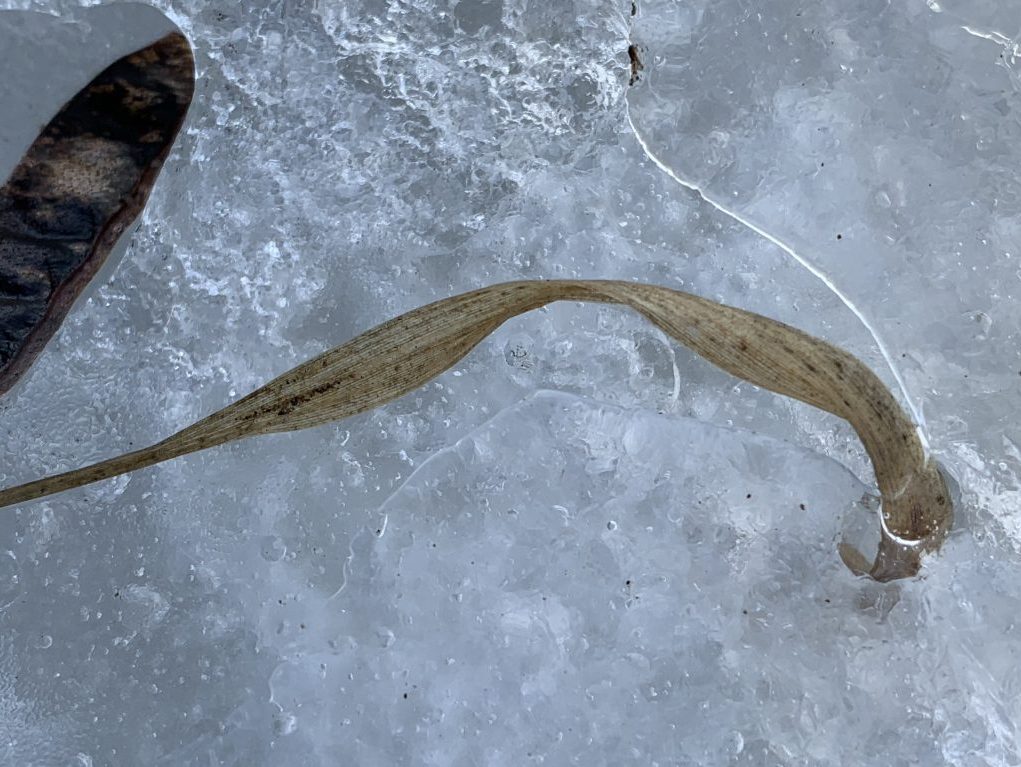
Since my yard is a squishy, muddy mess, I looked elsewhere for some outdoor time and landed at Spring Lake, my paddle-boarding destination of choice. I found a quiet spot as close to the water as I could manage — a boat ramp on winter break — and stretched out like a cat in the sun. And, like a cat, I spent some time surveying my surroundings. The lake is still frozen, but it’s softening — melting around the edges, thinning at the surface. Bits of autumn are still caught, frozen in the ice, but they’ll soon float free.
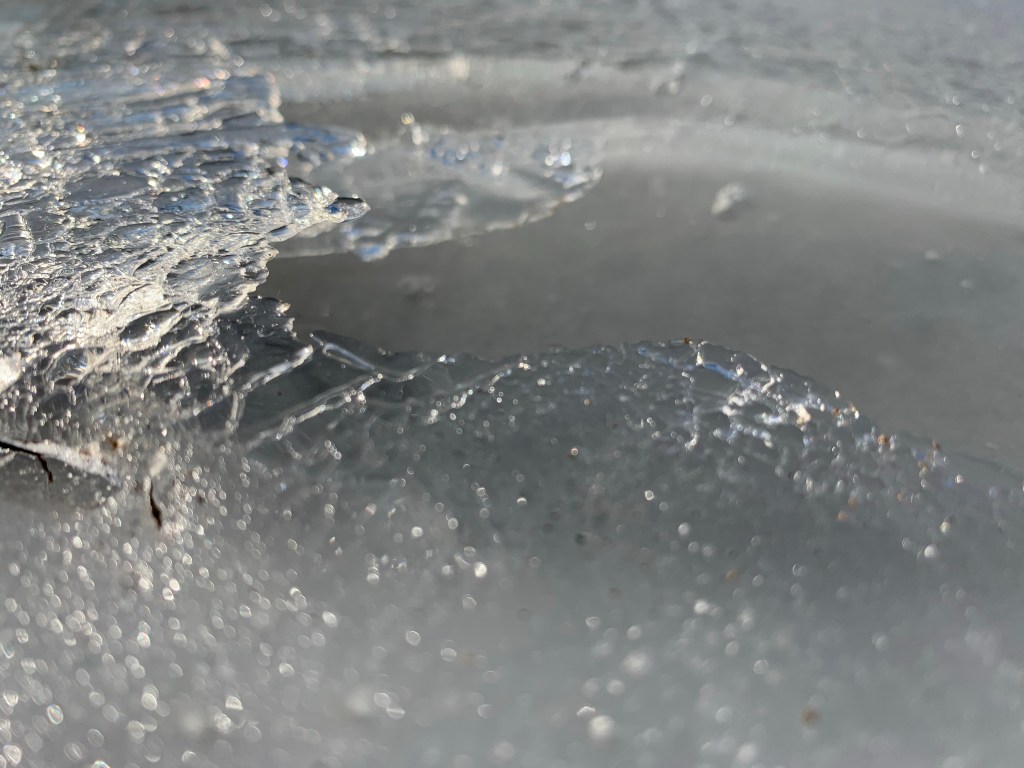
The ice recedes in intricate, unexpected ways. Some remains opaque, while some is crystalline. It flakes away in levels, shattered glass that will safely melt back into the lake. Soon, the lake will return to the form I love, with its warm water and glorious lakey smell.
Until then, we have ice. So much ice. The area next to the boat ramp was an icy nature museum today.
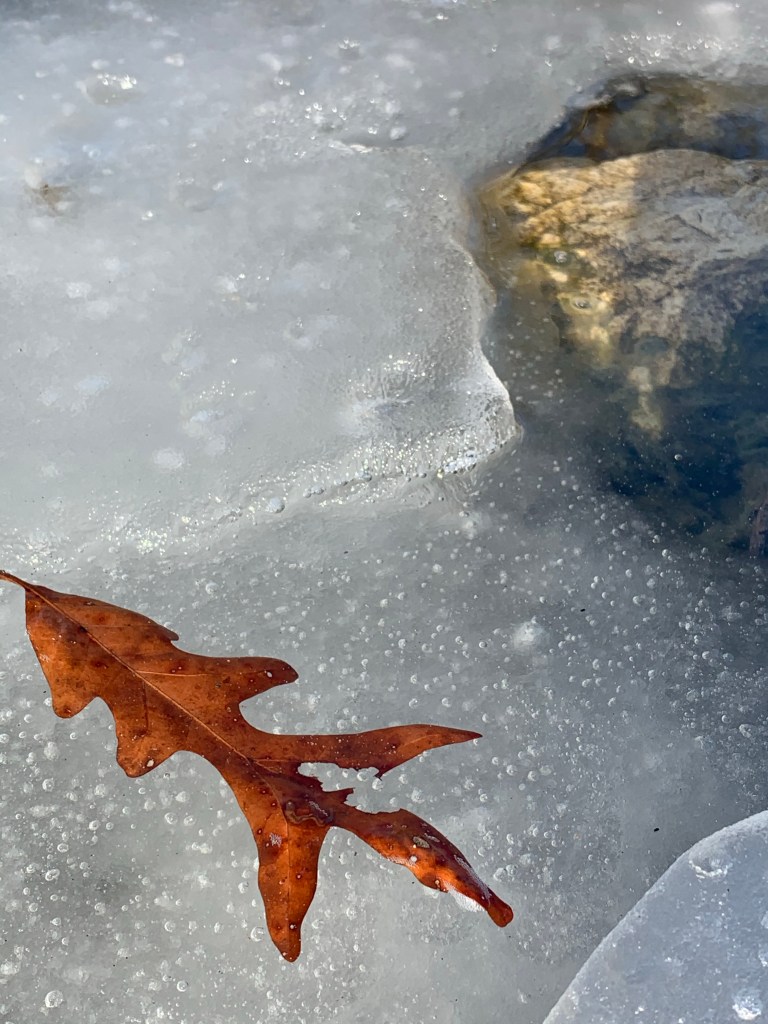
This oak leaf seems to be floating free but is suspended in ice - ice that from a distance is invisible. Even inches away, I had to touch the ice to be sure it was there. The leaf is locked away, though. Held out of reach and preserved, it’s just as it was in the fall, before winter’s kill took hold of our world.
Today was a pretty perfect day for late February, but that oak leaf is completely encased in ice. It’s close to the dock; the ice shouldn’t have been terribly thick in that spot. There’s even a rock with a moat of lake water between itself and the ice. Still, the leaf is trapped. Entirely visible but out of reach. Yes, the ice is melting. The lake will thaw. Nearby objects have shed their icy shells. But that leaf. That solitary oak leaf. Trapped.
Or protected.
Maybe the lake knows something we don’t. A rock is sturdier than a leaf, even the leaf of a mighty oak. After all, this is clearly a leaf made fragile with time. It’s brown, not green. A lobe is damaged. The leaf was strong by nature, but it’s weakened. Broken. Scarred.
Somehow, it’s still here.
Do we treasure this lonely, frozen, oak leaf, roughed up by the life it lived, if we view it as protected by its ice rather than trapped by the frozen lake? We can see the leaf, acknowledge the leaf, wonder about the leaf. Can we be patient with the leaf and its ice? Can we trust nature and its process? After all, it’s protected the leaf through this long winter. Can we rely on the knowledge that our oak leaf will soon float free and drift to the solid rock?
What’s our option?
 Woods Writes