This week’s prompt – to love life
This week, I’d like you to write into the challenges of opening to life, to the goodness of life, if even a tiny bit. What’s it like to greet life and say, as Ellen Bass does below, “yes, I will love you again”? And if you can’t fathom ever thinking that again, write into that – how far off and impossible it sounds.
Here’s Ellen Bass:
“to love life, to love it even
when you have no stomach for it
and everything you’ve held dear
crumbles like burnt paper in your hands,
your throat filled with the silt of it.
When grief sits with you, its tropical heat
thickening the air, heavy as water
more fit for gills than lungs;
when grief weights you like your own flesh
only more of it, an obesity of grief,
you think, How can a body withstand this?
Then you hold life like a face
between your palms, a plain face,
no charming smile, no violet eyes,
and you say, yes, I will take you
I will love you, again.”
— Ellen Bass
***********
~to love life~
It’s fitting that we are trapped in the depths of winter as I compose this response. I hate winter. This year, I hate winter even more than usual, but I also find myself identifying with winter. I’m in an emotional winter; my love of life is dormant.
Dormant. Not dead.
Our friends at Merriam-Webster define dormant as “having biological activity suspended” and “not actively growing but protected from the environment.” That sounds right. Feels right. I am absolutely dormant right now. Some systems have slowed. It’s okay, though; dormancy is both temporary and necessary. Trees need it. Broken hearts need it.
Right now, I feel like a tree in winter. I’m bare, stripped of leaves. My knots and twists, my broken branches and split trunk are on full display. It’s hard to tell by looking if I’ll leaf out in the spring. After all, I don’t seem focused on life, full of life. I seem focused on death. On dying.
Well, it’s winter. Things look dead in winter. Proof of life is scarce.
Spring will come. Life will be more evident. Love of life will seem possible.
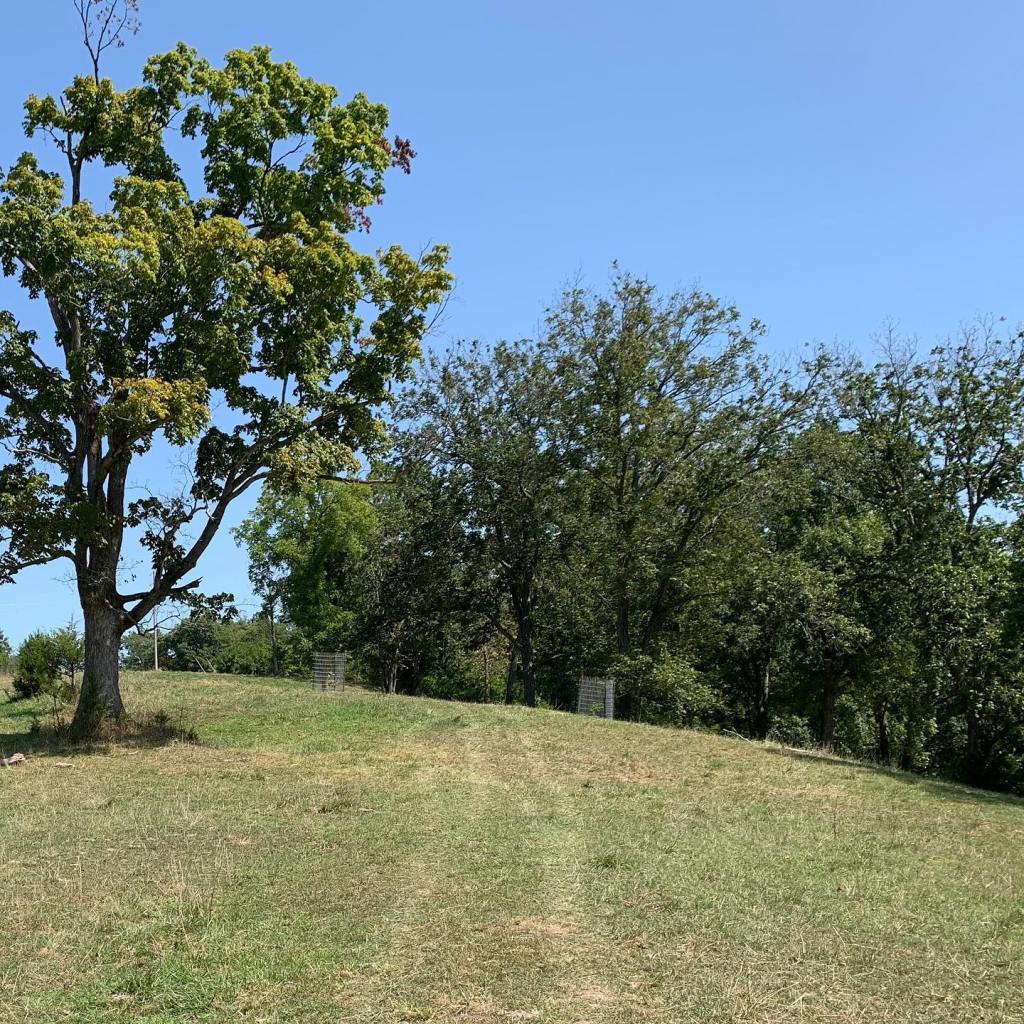
That tree I talked about? The tree that could be me? It’s the tree standing guard over Cooper’s ashes. It’s a magnificent, imperfect, survivor of a tree. From the bottom of the hill, the tree seems healthy. Whole. Strong. It’s backdropped by the limitless sky. From the bottom of the hill, it could be any other tree, historian of a hillside–site of wiener roasts and walks, senior pictures and four-wheeler rides. It’s the tree kept company by two baby bur oak and thousands of tears.
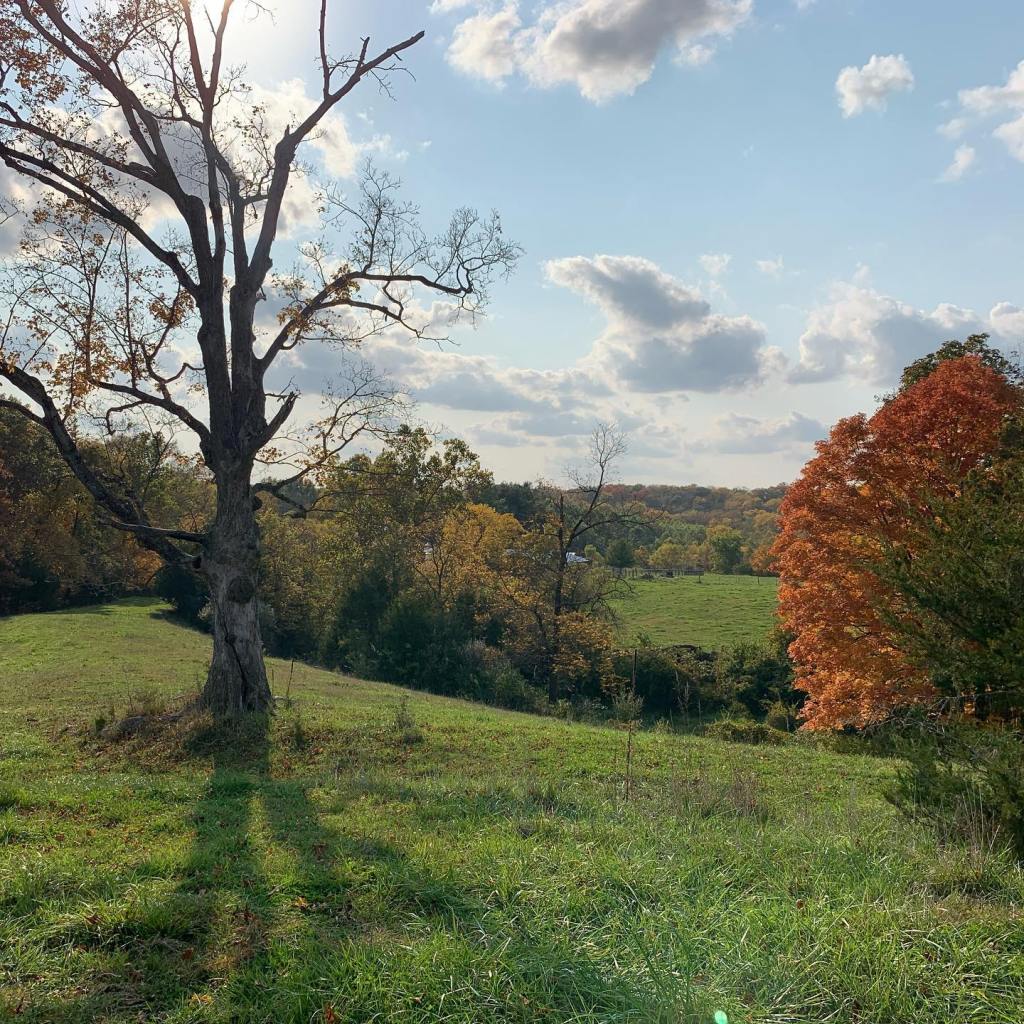
From the top of the hill, the tree’s wounds are visible. Its dead limbs and gnarly bits are bare–impossible to hide. From the top of the hill, we can know–really know–that tree isn’t perfect. It isn’t as strong as it seems from another angle, but it’s still standing. Maybe the fact that it’s still standing speaks to its strength. From the top of the hill, we can survey the place, remember the people. We can imagine Cooper, drifting on the wind of an August morning, hear the pastor’s words as we began our new reality.
This week, with winter holding us hostage, spring seems more a fantasy than an eventual reality. We’ll get there, though. We always do. And with spring will come new leaves. Renewed life, fresh from dormancy. We know these things will happen.
We also know the tree is damaged. It was damaged before this year’s dormancy. What remains unknown is how damaged. Will the tree be as strong as it was last year, or will more limbs have succumbed to winter–to hardship and damage and pain? What will break and fall? What will bear leaves?
Yes, spring will come, whether in weeks or months. Spring will come and we will learn the status of the tree. The world will once again feel alive. My own spring will come, too. I’ll eventually emerge from this dormancy–changed, scarred, broken, not entirely whole, but alive. I’ll emerge from this dormancy and again learn to love life.
 Woods Writes